Watercolor Flowers with Green Leaves Review
As a designer who has spent years translating digital art into tangible thread, I approach every new asset with a mix of excitement and skepticism. When I first encountered Watercolor Flowers with Green Leaves, my immediate reaction was not just about the visual beauty, but about its viability in a real-world embroidery environment. This collection is marketed as hand-painted clipart perfect for invitations and posters, but can it truly hold up when stitched onto fabric? After running several test projects, from custom baby onesies to boutique tote bags, I have formed a clear opinion on how this design performs as an actual machine embroidery design.
The First Stitch: Visual Personality and Mood
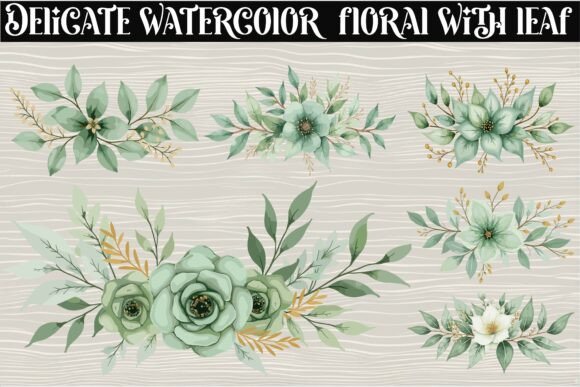
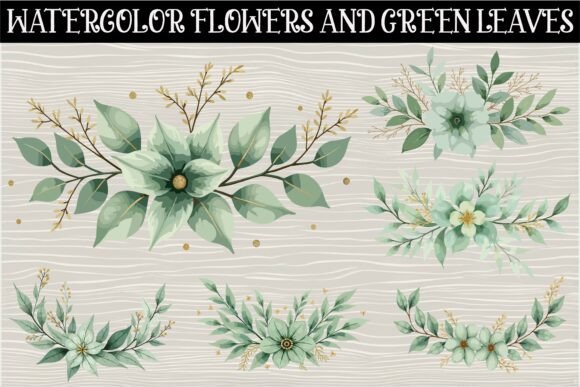
The defining characteristic of Watercolor Flowers with Green Leaves is its softness. Unlike rigid vector graphics that scream "digital," these shapes mimic the fluidity of wet paint. The color palette relies on natural tones that feel organic rather than synthetic. For a designer looking to create a handmade product that feels intimate and artisanal, this mood is exactly what is needed. It creates a sense of purity and calm that translates well into nursery decor or wedding gifts.
However, there is a catch. The very quality that makes this graphic beautiful on a screen—the lack of hard edges—can be a nightmare for stitch density. In a machine embroidery design, the needle must physically occupy space. If the original file contains too many subtle gradients or extremely thin lines, the resulting embroidery file might look muddy or lose definition entirely. My initial assessment suggests that this set works best when interpreted as a series of bold, distinct elements rather than a continuous watercolor wash.
Real-World Application: The Tote Bag Scenario
To truly evaluate Watercolor Flowers with Green Leaves, I decided to put it through a practical stress test. I envisioned a project for a small Etsy shop owner preparing for the holiday season: a set of custom embroidered tote bags featuring this floral motif. The goal was to create a boutique product that looked professional enough to command a higher price point.
I selected a sturdy cotton canvas bag, a common choice for tote bag design because it provides a stable surface. As I began the digitizing process, I noticed that the green leaves required careful attention. The flowing nature of the watercolor style meant that standard satin stitch paths could easily bunch up if not optimized. I had to adjust the angle of the stitches to follow the natural curve of the petals, ensuring the final finished product retained that soft, painted look without looking like a cheap sticker.
The result was striking. When stitched in high-quality polyester threads, the soft tones of the flowers took on a slight sheen that enhanced the watercolor effect. Customers browsing the Etsy listing would likely respond positively to the gentle aesthetic. It felt less like a generic clipart stamp and more like a bespoke illustration. This proves that Watercolor Flowers with Green Leaves has significant potential for small business merchandise where branding relies on a soft, welcoming image.
Where Caution is Required
While the design shines on flat, stable fabrics, there are specific scenarios where Watercolor Flowers with Green Leaves requires extreme caution. I strongly advise against using this design on stretchy fabrics like jersey t-shirts unless you use a heavy-duty stabilizer and test extensively. The delicate details of the flower centers could easily distort under tension, ruining the custom apparel.
Similarly, textured fabrics present a challenge. On a thick fleece sweatshirt or a rough burlap sack, the fine lines of the watercolor style may disappear into the weave. In these cases, the design needs to be simplified or scaled up significantly. Furthermore, if you are planning to use this for embroidered patches intended for frequent washing, you must ensure the stitch density is high enough to prevent fraying. A loose fill stitch might look pretty initially but will degrade quickly after a few laundry cycles.
Another critical area to watch is the hoop size. Because the design features intricate corners and varying line weights, attempting to stitch it in a very small hoop (like 4x4 inches) often results in lost detail. The tiny gaps between petals might close up, creating a solid blob rather than a delicate flower. Always verify the hoop size requirements before committing to a production run.
Impact on Brand and Customer Trust
In the world of craft business and creative entrepreneurs, the quality of your work speaks directly to your brand reputation. A poorly executed embroidery project can lead to returns and negative reviews, while a beautifully rendered one builds loyalty. Watercolor Flowers with Green Leaves, when done correctly, elevates the perceived value of any item it adorns.
Imagine a personalized gift like a baby blanket or a kitchen towel featuring this design. The soft colors evoke warmth and care, making the recipient feel special. For commercial embroidery clients, this design offers a versatile option that fits both modern and traditional aesthetics. However, if the stitching is sloppy, the illusion of a hand-painted piece breaks, and the product looks mass-produced. This is why checking thread colors and ensuring proper contrast is vital. You want the greens to pop against the background without overwhelming the softer flower tones.
Practical Designer Notes for Success
Before you download and start stitching, here is my checklist for working with Decorative Elements like this set:
- Test on Scrap Fabric: Never commit to a final product without a test run. Check how the fill stitch behaves on your specific material.
- Review Stitch Density: Ensure the digitizer has balanced the density so the fabric doesn't pucker but the design remains legible.
- Check File Formats: Confirm which digital embroidery file formats are available for your specific machine. If the provided details do not list compatibility, reach out to the creator.
- Stabilizer Selection: Use the appropriate stabilizer for your fabric weight. A light cut-away is usually best for maintaining the integrity of detailed floral designs.
- Licensing Verification: If you plan to sell finished items, double-check the license terms. Some graphics allow personal use only, while others permit commercial sales of physical goods.
- Mockup Testing: Create black and white mockups to see if the design holds its shape without relying on color to define the form.
Ultimately, Watercolor Flowers with Green Leaves is a powerful asset for designers who understand the nuances of thread and fabric. It is not a plug-and-play solution for every situation, but with the right preparation and technical skill, it can transform a simple garment or home good into a premium design asset. Whether you are a hobbyist making a holiday gift or a seasoned apparel decorator building a catalog, this floral set offers a touch of elegance that, when stitched with care, delivers a professional and heartfelt result.